Wells and septic on rural Florida land: what the soil test really tells you
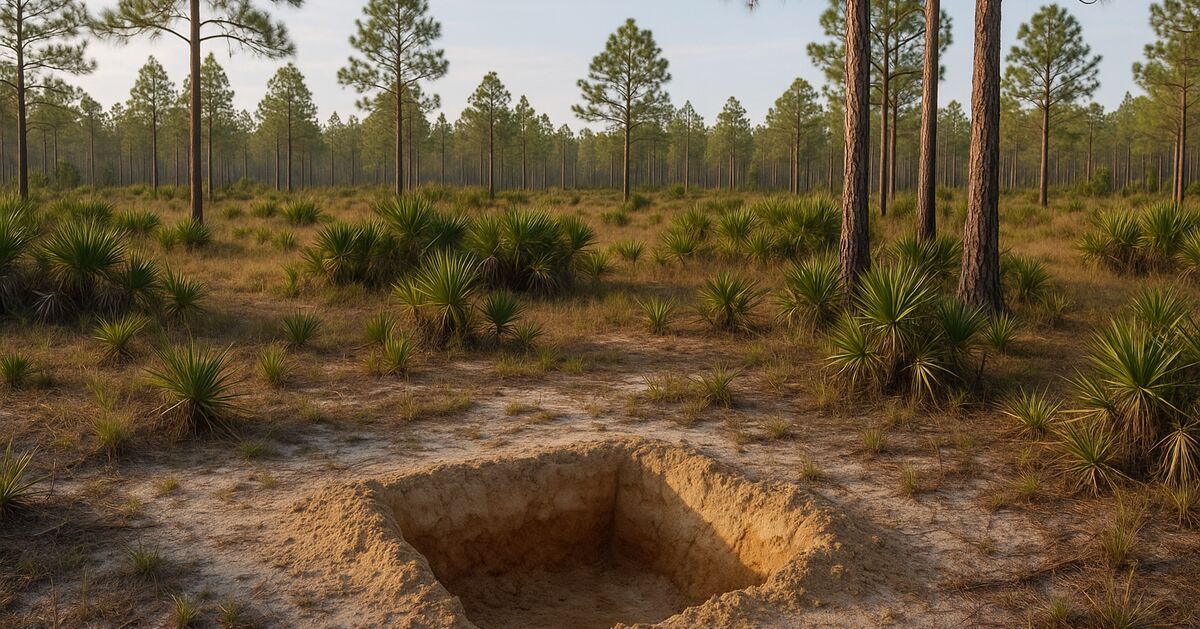
Rural Florida land can look absolutely perfect from the road - tall pines, sandy soil, a gentle slope away from a pond - and still fail the one test that decides whether you can ever put a home on it. That test is the percolation test, and if you are buying vacant land where public water and sewer are nowhere nearby, understanding what it measures - and what it cannot fix - is the single most important piece of due diligence you can do.
This post walks you through the full picture: how percolation testing works in Florida, what the Florida Department of Health (DOH) requires before it issues a septic permit, how private wells fit into the equation, and how to honestly evaluate a parcel that may not support conventional wastewater treatment. Nothing here is sugarcoated. Some parcels genuinely cannot be developed for residential use, and knowing that before you sign anything is far better than knowing it after.
Why public utilities are often not an option in rural Florida
Florida's rural counties - think Levy, Taylor, Lafayette, Hardee, Glades, and large swaths of Marion, Alachua, and Highlands - have enormous amounts of land that sits well outside any municipal utility service area. Even where county water lines exist, they may stop at the edge of a subdivision miles from your parcel. Extending a public sewer line is often very expensive, and most county utilities will not extend lines to serve a single lot without a developer paying the full cost.
The practical result is that many rural Florida homesteads rely on two private systems: a drainfield-based onsite sewage treatment and disposal system (OSTDS) - the technical name for what most people call a septic system - and a private well for potable water. If either of those systems cannot work on your parcel, you do not have a buildable lot in any practical sense.
Before you get deep into parcel research, the Vacant Land Due-Diligence Checklist for Florida Buyers is worth printing out and keeping close. Utility feasibility sits right at the top of that checklist for good reason.
What a percolation test actually measures
A percolation test - commonly called a perc test - measures how quickly water moves through the soil at the depth where a septic drainfield would be installed. The idea is straightforward: a septic drainfield works by slowly releasing treated effluent into the surrounding soil, which filters and breaks down the waste before it reaches groundwater. If the soil absorbs water too slowly, effluent backs up. If it absorbs too quickly, waste can reach the water table before it has been adequately treated.
In practice, a perc test involves digging or boring test holes to the proposed drainfield depth, saturating the soil, and then timing how far the water level drops over a set period - typically expressed in minutes per inch (MPI). Florida uses that rate, combined with information about soil type and the depth to the seasonal high water table, to calculate the minimum drainfield area needed for a given daily sewage flow.
Here is what the perc test cannot tell you on its own:
- Depth to the seasonal high water table. This is measured separately, often with a soil boring or a perimeter probe. Florida requires a minimum vertical separation between the bottom of the drainfield and the seasonal high water table - typically 24 inches for a standard system. In low-lying or flatwoods parcels, that separation simply may not exist.
- Soil profile and horizons. A trained soil evaluator reads the layers of soil exposed in a pit. Clay-dense layers (called restrictive horizons) can block downward water movement entirely, making an otherwise adequate perc rate irrelevant.
- Site setbacks. Florida rule 64E-6 (administered by the DOH) requires specific horizontal distances between a drainfield and property lines, water bodies, wells, buildings, and other features. A parcel might pass a perc test and still lack enough usable area once all the setbacks are applied.
Florida DOH septic permitting: the basics
In Florida, onsite sewage treatment is regulated by the Florida Department of Health under Chapter 381.0065 of the Florida Statutes and the corresponding administrative rules in Chapter 64E-6 of the Florida Administrative Code. Each county health department administers the program locally, which means you will deal with your county DOH office for any permits.
The permitting process, in brief, looks like this:
- Site evaluation. A licensed soil evaluator or the county health department inspector visits the property and conducts a site evaluation. This includes the perc test, a soil profile examination, measurement of the seasonal high water table, and a site sketch showing the proposed building footprint, well location, and drainfield area.
- System design. Based on the site evaluation results and the estimated daily sewage flow (which Florida calculates by bedroom count), the evaluator or the DOH determines what type of system - if any - will work, and how large it must be.
- Permit issuance. If the site qualifies, the DOH issues an OSTDS construction permit. The permit specifies the system type, the approved drainfield location, and any special requirements.
- Installation and inspection. A licensed septic contractor installs the system. The county health inspector visits before the drainfield is covered to verify compliance.
- Final approval. Once the inspection passes, the DOH issues a certificate of completion, which is typically required before a certificate of occupancy can be issued for the home.
The fee structure varies by county, but site evaluation fees and permit fees together commonly run a few hundred dollars. The actual system installation is a separate and significantly larger cost.
When a parcel fails - and what your options are
This is the part that sellers and buyers alike sometimes gloss over, so it is worth being direct: a parcel can fail to qualify for a standard septic system, and when that happens, your options narrow quickly.
A high seasonal water table is the most common disqualifier in Florida's flatwoods and low-lying areas. The standard system requires that 24-inch separation between the drainfield bottom and the seasonal high water table. If the water table sits at 12 inches below the surface for part of the year, a standard system is out.
Alternative and advanced systems can sometimes rescue a parcel that fails for a conventional system. These include:
- Mound systems, which raise the drainfield above natural grade using imported fill. These require the right soil conditions, significant space, and higher installation costs - often two to three times a conventional system.
- Aerobic treatment units (ATUs), which treat effluent to a higher standard before dispersal and can reduce setback and separation requirements in some situations.
- Drip irrigation systems, which distribute highly treated effluent through subsurface emitters and can work on some challenging sites.
Each of these alternatives requires its own site evaluation and DOH approval. They cost more to install and more to maintain. And not every failed parcel can be saved by an alternative system. If the water table is simply too high over too much of the parcel, or if the lot is too small to meet setbacks after the drainfield area is carved out, no alternative system will change that physical reality.
If you are evaluating a parcel and the listing mentions no prior site evaluation, that is a significant gap in the information you need. The Florida Land for Sale: A Plain-English Buyer's Guide covers this gap in the broader context of evaluating rural parcels, and it is worth a read alongside this post.
Private wells: the other half of the equation
Where public water is not available, you need a private well. Florida regulates private well construction under Chapter 373 of the Florida Statutes and Chapter 62-532 of the Florida Administrative Code, with the Florida Department of Environmental Protection (DEP) setting minimum standards and water management districts and county health departments handling local permitting.
Key things to understand about private wells on rural Florida parcels:
Depth and yield vary by location. The Floridan Aquifer, which underlies most of the state, is one of the most productive aquifer systems in the world (a fact well documented by the U.S. Geological Survey). In much of central and north Florida, a drilled well reaching the Floridan Aquifer will produce adequate water at moderate cost. In parts of south Florida and the coastal areas, the aquifer is more brackish closer to the surface, and getting potable water requires deeper drilling or alternative treatment.
Setbacks from the septic system matter. Florida rule 62-532 requires a minimum horizontal distance between a private well and an OSTDS drainfield - typically 75 feet for a conventional well. On a small parcel, meeting both the septic setbacks and the well setback simultaneously can be geometrically impossible, disqualifying the lot for independent development.
Water quality testing is not optional. A new well should be tested for a standard panel of contaminants including coliform bacteria, nitrates, pH, and any area-specific concerns (arsenic is a naturally occurring issue in parts of Florida's geology, for example). The Florida DOH county health departments can advise on what tests are appropriate for a given area.
Drilling costs depend on depth. Shallow sand-point wells can be inexpensive but are vulnerable to contamination and drought. Deeper cased wells into the Floridan Aquifer cost more, depending on depth and casing requirements, but are generally more reliable. The Florida Water Well Association and local licensed well contractors are the right resources for site-specific estimates.
Reading the warning signs before you order a perc test
A site evaluation and perc test cost money and time. Before you commission one, you can do meaningful pre-screening using freely available information.
Soil survey maps. The USDA Natural Resources Conservation Service (NRCS) publishes Web Soil Survey, a free online tool that shows the soil series for any parcel in Florida. Soil series associated with high water tables - Pompano, Immokalee, Myakka, Winder, and similar flatwoods soils - are a clear signal that a standard septic system may be difficult or impossible. This does not mean the parcel automatically fails, but it should prompt a closer look.
FEMA flood map and wetland data. A parcel that sits in a FEMA Special Flood Hazard Area or contains significant wetland area often has a high seasonal water table by definition. The Flood zones and wetlands on Florida vacant land: how to read the maps before you buy post covers how to pull those maps and what to look for.
County property appraiser records. Some county appraisers note whether a prior site evaluation was conducted and whether a permit was issued. A parcel with an expired or denied permit on record tells you something important.
Lot size. Florida's setback requirements for septic and wells create a practical minimum lot size for development. As a rough rule of thumb, lots under half an acre in rural areas with no public utilities face a harder geometry problem, though the actual minimum depends on site-specific conditions.
Honest expectations: what a buyer should ask for
If you are seriously interested in a rural Florida parcel and the seller does not already have a DOH site evaluation on file, here is what a careful buyer does:
- Ask whether any prior site evaluation or perc test has been conducted and request the documentation.
- Commission a new site evaluation from a licensed soil evaluator or through the county DOH before closing, or negotiate the purchase contract to make the sale contingent on a satisfactory evaluation.
- Talk to the county health department directly. County DOH offices are generally helpful and can tell you whether any permits or evaluations are on file for a given parcel, and they can explain local conditions that might affect feasibility.
- Check the soil survey and flood maps yourself as a first pass, before spending money on a formal evaluation.
Owner financing can make rural land more accessible, and understanding how that process works alongside your due diligence matters too - the post on how owner-financed land works in Florida explains the structure from offer to recorded deed.
The bottom line is this: a parcel that cannot support a septic system and a well is not a buildable parcel for residential use, regardless of how the listing describes it or how attractive the price looks. That is not a reason to avoid rural land - it is a reason to do the homework first, so that the parcel you buy is genuinely capable of supporting the life you want to build on it.
For more context on what rural Florida land ownership actually looks like from a cost and regulatory standpoint, the property taxes on Florida vacant land post rounds out the picture of what you will owe annually while you hold the land. And if you have questions specific to a parcel you are evaluating, the FAQ page covers a range of common buyer questions in plain English.
Rural land in Florida can be an extraordinary thing to own. Getting the soil and utility feasibility right before you commit is simply the responsible way to get there.
Sources & further reading
- Florida Onsite Sewage Treatment and Disposal Systems (OSTDS) Program (Florida Department of Health)
- Chapter 64E-6, Florida Administrative Code - Standards for Onsite Sewage Treatment and Disposal Systems (Florida Division of Administrative Hearings)
- Web Soil Survey - USDA Natural Resources Conservation Service (USDA Natural Resources Conservation Service)
- Florida Water Well Construction Permitting - Chapter 62-532, Florida Administrative Code (Florida Department of Environmental Protection)
- The Floridan Aquifer System - USGS Water Resources (U.S. Geological Survey)
- Chapter 381.0065, Florida Statutes - Onsite Sewage Treatment and Disposal Systems (Florida Legislature)
- U.S. Department of Agriculture (named in this article) (U.S. Department of Agriculture)
- Federal Emergency Management Agency (named in this article) (Federal Emergency Management Agency)
Revision history (1)
- Pre-publish editorial QA: 1 flagged, 1 softened; claim audit: 8 claims, 2 rewritten
Claim-by-claim audit (8 checked)
- “Florida requires a minimum vertical separation between the bottom of the drainfield and the seasonal high water table - typically 24 inches for a standard system.” (cited → flrules.org)
- “Florida rule 64E-6 (administered by the DOH) requires specific horizontal distances between a drainfield and property lines, water bodies, wells, buildings, and other features.” (cited → flrules.org)
- “Florida rule 62-532 requires a minimum horizontal distance between a private well and an OSTDS drainfield - typically 75 feet for a conventional well.” (cited → flrules.org)
- “The Floridan Aquifer, which underlies most of the state, is one of the most productive aquifer systems in the world (a fact well documented by the U.S. Geological Survey).” (cited → usgs.gov)
- “Extending a public sewer line is often very expensive, and most county utilities will not extend lines to serve a single lot without a developer paying the full cost.” (rewritten to what the article can stand behind)
- “Mound systems require the right soil conditions, significant space, and notably higher installation costs than a conventional system.” (rewritten to what the article can stand behind)
- “Deeper cased wells into the Floridan Aquifer cost more, depending on depth and casing requirements, but are generally more reliable.” (rewritten to what the article can stand behind)
- “As a rough rule of thumb, lots under half an acre in rural areas with no public utilities face a harder geometry problem, though the actual minimum depends on site-specific conditi…” (reasoning shown in the article)
Questions
Questions about a parcel?
Tell us which parcel you are looking at and what you want to know. A real person at Lotvestors LLC answers by email, usually within one business day.
We work by email, not by phone: it keeps a written record of every answer about a parcel.